


Solides Englisch im Job – heutzutage ein absolutes Muss! Egal ob bei schriftlicher Kommunikation, in Meetings oder beim Business-Small-Talk: Wer sich auf Englisch gewandt ausdrücken kann, ist klar im Vorteil. Das Sprachmagazin Business Spotlight richtet sich an Leser und Lerner aus dem deutschen Sprachraum und hilft dabei, englische Grammatik und Wortschatz zu erweitern.
Das Magazin Business Spotlight
Der Weg zu noch besserem Englisch im Beruf – geebnet mit Business Spotlight:
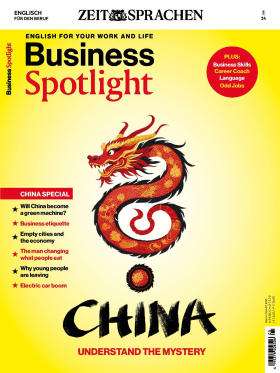
- 12 Mal im Jahr: randvoll mit informativen Artikeln aus Wirtschaft und Technologie
- erhältlich als gedruckte Ausgabe und E-Paper
- von Journalisten und Didaktikern entwickelt
- Texte in drei Niveaustufen: Easy (A2) – Medium (B1-B2) – Advanced (C1-C2)
Inhalte des Sprachmagazins
Das monatlich erscheinende Sprachmagazin Business Spotlight bietet nicht nur Übungen zum Verbessern Ihrer Sprachgewandtheit, sondern auch zahlreiche lesenswerte Artikel. Themen wie Unternehmensführung oder erfolgreiches Verhandeln werden genauso behandelt wie Technologie und Karriere. Berichte zum aktuellen Weltgeschehen im Business-Kontext runden das Lese- und Lernvergnügen ab. Alle Inhalte werden von Journalisten und Didaktikern speziell für die Bedürfnisse deutscher Lerner verfasst. Die Texte sind in drei Schwierigkeitsgraden verfasst, sodass Anfänger und Fortgeschrittene ihre Englischkenntnisse gleichermaßen erweitern können.
In jedem Business Spotlight

Business Skills
Wie führe ich guten Small Talk? Oder effiziente Meetings? Wenn Sie erfolgreich sein möchten, müssen Sie Antworten auf diese Fragen finden. Unsere „Business Skills“-Artikel helfen Ihnen und versorgen Sie mit den sprachlichen Basics.

Leadership
Es ist egal, auf welcher Karrierestufe Sie stehen: Das Thema gute Führung geht uns alle an. Ken Taylor beleuchtet in der Rubrik „Leadership“ Trends und gibt handfeste Tipps für Ihren Arbeitsalltag.

Head-to-Head
In jeder Ausgabe befragen wir weltweit führende Experten zu kontroversen Themen – und bilden jeweils beide Seiten der Medaille ab. Dadurch können Sie die Diskussion besser verstehen und sich selbst ein Urteil bilden.
Das Übungsheft von Business Spotlight
Intensivtraining für Grammatik, Wortschatz und mehr
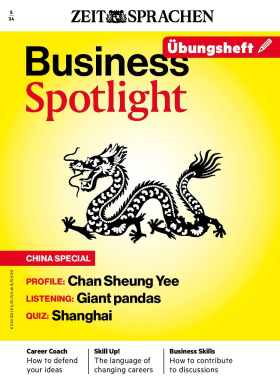
- Randvoll mit Übungen in drei Niveaustufen
- umfassende Grammatik-, Hörverständnis-, Lese- und Wortschatz-Übungen
- praxisnahe Tipps aus dem Business-Alltag
- Tests zum Überprüfen des eigenen Lernerfolgs
Das Power-Lernpaket: das Übungsheft von Business Spotlight
Das Übungsheft, im praktischen Pocket-Format, ist die ideale Ergänzung zum Magazin Business Spotlight und bietet zusätzliche Übungen zur Vertiefung der englischen Sprache. Mit diesen verbessern Sie Grammatik und Wortschatz und lernen Redewendungen für unterschiedliche Situationen. Jedes der Übungshefte widmet sich einem ganz bestimmten Schwerpunktthema und enthält einen Selbsttest „Check your English“ zur Überprüfung der eigenen Englischkenntnisse. Statt im gedruckten Heft können Sie die Aufgaben auch als interaktives Übungsset an Ihrem PC oder Mobilgerät lösen.
In jedem Übungsheft:
- Trends
- Communication
- Careers
- Language