

Starten Sie den Audio-Text
Mit dem Audio-Player können Sie sich den Text anhören. Darunter finden Sie das Transkript.
Melita: Hello, listeners. Welcome to Business Spotlight Audio. I’m Melita Cameron-Wood, the audio editorRedakteur(in)editor, and I’m here today with Judith Gilbert, the editor-in-chiefChefredakteur(in)editor-in-chief of Business Spotlight. Welcome, Judi.
Judi: Hi, Melita. Thanks for having me.
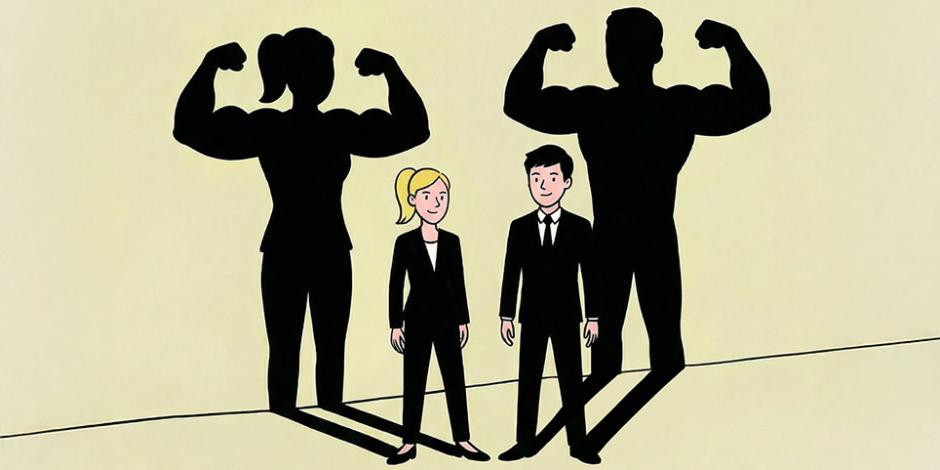
Melita: Thanks for being here. Today, we are going to be talking about the topicThematopic of confidenceSelbstbewusstsein, Selbstvertrauenconfidence at work. Sometimes, people appear confident, but they don’t really feel it. Judi, would you describe yourself as a confident person in professional situations?
Judi: In general, I’m a pretty confident person.You know, you have to be as editor-in-chief of a magazine. You have to have a pretty clear vision and you manage a team, so it’s be part and parcel of sth.ein wesentlicher Bestandteil von etw. seinpart and parcel of the job. But that’s not to say that there are never instanceFall, Beispielinstances where I doubt or question myself. But I think that’s healthy. In general, when people have impostor syndromeImpostor-, Hochstapler- Syndromimpostor syndrome or doubt themselves, I think they should also have some confidence that whoever hire sb.jmdn. einstellenhired them sees in them something that they’re looking for. So, that’s an important point that I tend to think people overlook.
Melita: Hmm, I think that’s a good thing to bear in mind. I think I’m more confident in certain areas than in others. Sometimes, the things that I’m confident in surprise me a little bit, because I don’t mind getting up in front of a group of people and talking or giving a presentation. I actually quite enjoy public speaking, but I feel much less confident when I start comparing myself to other people in the same field.
Judi: I think that’s something that people tend to do, but I wouldn’t advise it, because I think the only person you should compare yourself with is yourself. Other people have situations that are different, and I think if I started comparing myself to other people, it would negatively impact sth.sich auf etw. auswirken, etw. beeinflussenimpact my confidence, because there’s always going to be somebody who is bigger and better and making more money and hustle (US)sich ins Zeug legenhustling. I think we should look at what we’ve got, what we’ve done, where we are, how we got here and be really proud of what we’ve done.
Melita: I do have a few little strategies that I use to try and improve my self-confidence. Sometimes, it will be as simple as a little bit of positive self-talk, telling myself “I can do it...” in the mirror. Those positive affirmationBestätigungaffirmations can help. Sometimes, it’s good to envision sth.sich etw. vergegenwärtigenenvision the goals that you want as if they’ve already been realized. Judi, do you have any strategies that you use to boost sth.etw. verstärkenboost your confidence?
Judi: What I do to boost my confidence when I need it is I think about what I’ve done and what I’m really proud of having done and having achieve sth.etw. erreichenachieved, and I think of my own strengths and how they can be applied, even if they are not directly or overtlyoffenkundigovertly applicable. That always helps, and I would recommend that to anyone. And even if I’m not an expert in the field, I remind myself that you don’t really have to be to engage sb.hier: jmdn. motivierenengage people and bring good ideas to the table.
Melita: At the end of the day, nobody was born an expert. We all learn along the way, and I think that can give you a little bit of extra confidence, just remembering that everyone else in the room at some point knew less than they know now.
Certain situations arise every now and then that make us more nervous than others. Do you have any examples of situations where you lack confidence at work?
Judi: I wouldn’t say that I have a situation repeatedly where I lack confidence. Sometimes, I’m not so sure if we’re going to make a deadlineeine Frist einhaltenmake a deadline, if that counts as confidence or lack thereof, but we always do. So, I shouldn’t worry about that. I have aspects of my job that I’m a little less interested in: bookkeeping, spreadsheetTabellenkalkulation, -blattspreadsheets, that kind of thing.
Melita: I think I have yet to meet someone who enjoys bookkeeping, but maybe that’s just the circle of friends I have. I don’t hang out with sb. (ifml.)mit jmdm. Zeit verbringenhang out with many accountantBuchhalter(in)accountants.
There is a very delicatefeindelicate strike a balanceein Gleichgewicht schaffenbalance to be struck between being confident and showing a little bit of vulnerabilityVerletzlichkeitvulnerability to gain trust. 'cosbecause’Cos I think sometimes, if someone appears outrageouslyungeheuerlichoutrageously confident, then they might be a little bit off-puttingabschreckendoff-putting as well, you might feel a bit intimidatingeinschüchterndintimidated. So, it’s quite good, I think, to also talk about moments where you did feel a little bit more unsure. I think that makes you appear a lot more human in the eyes of others as well, more approachablezugänglichapproachable. What do you think about that?
Judi: I definitely agree with you. Showing vulnerability builds an enormous amount of trust. You know, if you really don’t know something, say so. Not everybody knows everything, and people appreciate sth.etw. schätzenappreciate honesty. I mean, in my work here at Business Spotlight, I am always consulting with my editors. Now, they might tell you if they were here that I drive them crazy, but, you know, I tend to think, “OK. pool sth.etw. bündelnPool knowledge. See what everybody says.” It’s not a sign of lack of confidence. It’s just trying to make the best product possible and if I come alongdaherkommencame along and said, “OK. I know everything, and I don’t need any kind of consultation...” that wouldn’t be doing myself or the people I work with or the product that we make any good. So, you know, there’s that, but at the same time, you do have to master sth.etw. beherrschenmaster the art of being able to do that, and also showing that you are be up for sth. (ifml.)für etw. bereit/geeignet seinup for the job and that everything is under control. That’s what your own boss, no matter who that person is, that’s what they want to know, and that’s what’s going to make you successful at work.
Melita: That combination of leadership skills with a little bit of vulnerability, I think, goes a go a long wayviel bewirken könnenlong way. So, thank you for joining me to talk about all things confidence.
Judi: You are quite welcome. My pleasure.
Melita: And if anyone out there would like to hear more from us, you can follow us on our socials, @business.spotlight_official on Instagram or @business-spotlight on LinkedIn. We look forward to doing sth.sich darauf freuen, etw. zu tunlook forward to hearing from you. In the meantime, enjoy learning your business English.
Neugierig auf mehr?
Dann nutzen Sie die Möglichkeit und stellen Sie sich Ihr optimales Abo ganz nach Ihren Wünschen zusammen.