


Starten Sie den Audio-Text
Mit dem Audio-Player können Sie sich den Text anhören. Darunter finden Sie das Transkript.
The following listening exercise from Business Spotlight Übungsheft (p. 5) is based on the article “The end of coins?” (Names & News, p. 8). Here, we provide you with the audio file and transcript.
Click here to open the transcript
The end of coins?
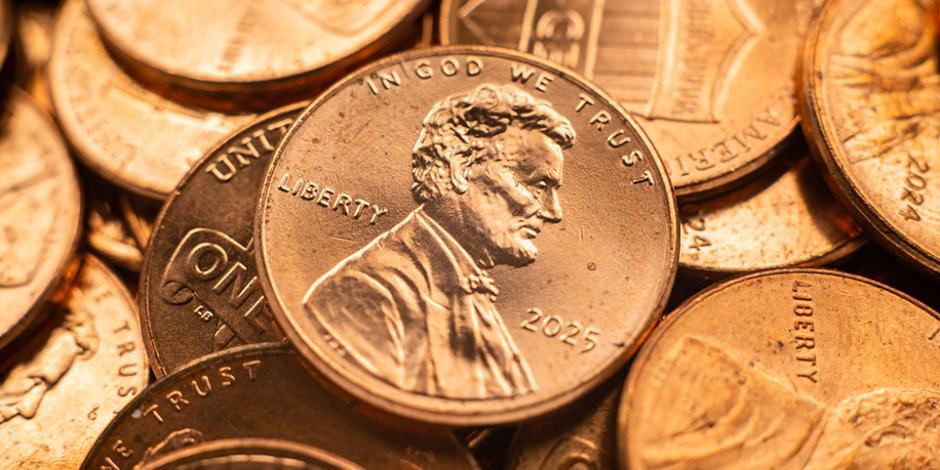
Australia did it in 1992; Canada in 2013. In 2025, the U.S. also decided to stop producing its one-cent coin, known as the “penny.” Made of copper-platedverkupfertcopper-plated zinc, each penny is worth one cent but now costs almost four cents to make and distribute — more than double the cost ten years ago. In 2024, the U.S. TreasuryFinanzministeriumTreasury suffered a loss of over $85 million on penny production alone.
what’s moredazu kommt (noch)What’s more, people aren’t using coins much anymore. An estimated 60 percent of the U.S. coins in circulation are stash sth. awayhier: etw. bunkernstashed away in piggy bankSparschweinpiggy banks or lost down the backhier: Rückenlehneback of a couch. Getting rid of small-denominationmit kleinem Nennwertsmall-denomination coins saves the government money. However, a study by the Richmond Federal Reservehier: US-ZentralbankFederal Reserve estimates that eliminating the penny could cost American consumers $6 million a year, as businesses round up prices. And removing the five-cent coin (the “nickel”) would cost them $56 million a year.
Is getting rid of coins a first step toward getting rid of all cashBargeldcash? Many would welcome that, but digital-only money would put others at a disadvantage. Aaron Klein, an economist at the Brookings Institute, told Fortune that U.S. banks operate sth.etw. betreibenoperate a “reverseumgekehrtreverse Robinhood” system that rewards the rich. “The less money you have, the more money it costs you to access your money digitally,” he explains. “If you’re living paycheck (US)Gehaltsscheckpaycheck-to-paycheck, basic banking is very expensive.”